 English
 Spanish
 French
 German
 Norwegian
 Portuguese
 Swedish
 Italian
 Russian
 Simplified Chinese
 Japanese


Springtime in Holland: Getting to Know the Flower Garden of Europe
Mention the words ‘tulip’ or ‘garden of Europe’ and one place comes instantly to mind: Holland. Since the peak of so-called ‘tulip mania’ in the mid-1600s, this lowland nation has been inextricably linked to the jaunty Springtime flower.
Flower lovers will get more than they could ever expect with a visit to the magnificent Keukenhof Gardens, the undisputed ‘Garden of Europe’, during their cruise aboard our hotel barges Panache and La Nouvelle Etoile.
About Keukenhof
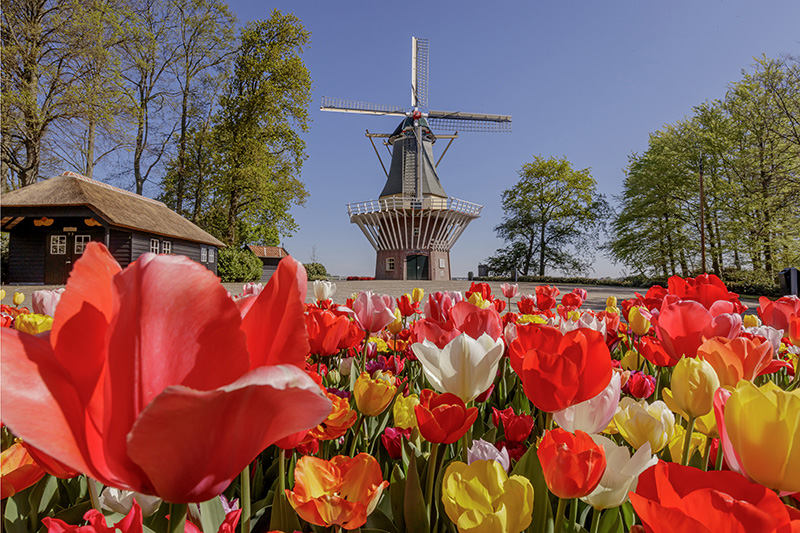
If you’re embarking on a springtime cruise with us aboard the hotel barge Panache or La Nouvelle Etoile, you are treated to seeing the Keukenhof Gardens in full bloom. The flowers are at their best between mid-March and mid-May, though of course this can fluctuate depending on the weather.
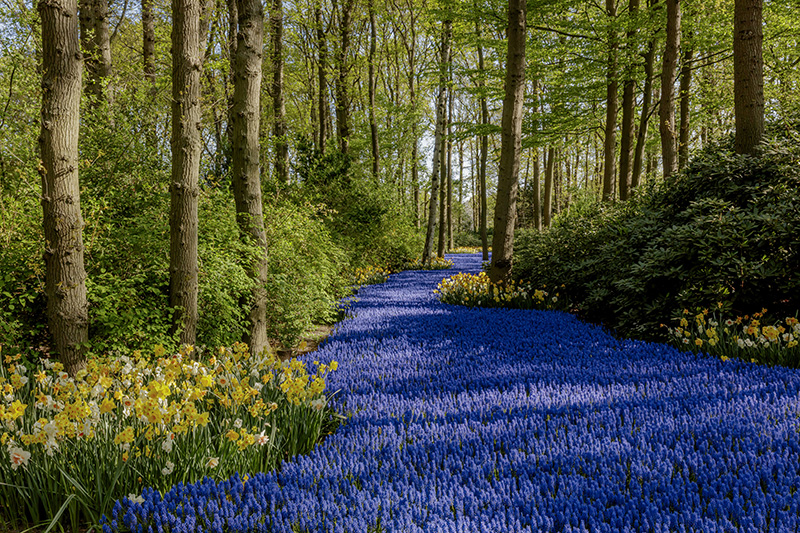
Visiting the garden of Europe can be a little overwhelming, and it’s not hard to see why. With 80 acres, 800 varieties of tulips, and seven million flowers in total – also including daffodils, crocuses, narcissi, and hyacinths – it’s hard to know where to begin. Some of our favourite parts of Keukenhof include the English-style garden with its winding paths and the historical garden where you can view many old varieties of bulbs.
However, no matter where you begin, you’re guaranteed to find colourful, sweet-smelling surprises around every corner. It goes without saying – don’t forget your camera.
Located in the small town of Lisse just southwest of Amsterdam, these expansive gardens were once the hunting grounds for the Dutch elite, who lived in the adjacent Castle Keukenhof as far back as the 15th century. The modern garden as we know it today did not come into being until 1949. The project was conceived as a place where domestic and international tulip growers could exhibit their specimens to the world market – an important function, as Holland remains the largest exporter of flowers in the world.
Today,the world’s largest flower garden park is one of Holland’s most important tourist attractions, welcoming over one million visitors each year. But Keukenhof is only part of the story behind why Holland itself is considered the flower garden of Europe.
The Flower History of Holland
To understand why Holland is considerd the flower garden of Europe, it helps to look back at the country’s fascinating horticultural history. Tulips themselves did not originate in the Netherlands. They were first cultivated in the Ottoman Empire and were introduced to Western Europe during the 16th century.
When tulip bulbs arrived in the Dutch Republic, however, they found the perfect home. The sandy coastal soil, cool climate, and flat landscape created ideal growing conditions. Dutch growers quickly began experimenting with breeding new varieties, producing striking colours and patterns that had never been seen before.
This growing fascination with tulips led to the famous “tulip mania” of the 1630s. Rare tulip bulbs became luxury items, traded for astonishing prices – sometimes worth more than a house. Although the speculative bubble eventually collapsed, the Dutch love affair with tulips never faded.
Over the centuries, the Netherlands refined its horticultural expertise. Innovative greenhouse technologies, advanced bulb cultivation techniques, and a strong agricultural infrastructure transformed the country into the world’s leading flower exporter. Today, millions of bulbs and cut flowers are shipped from Holland to every corner of the globe each year.
Flower Markets in Holland Today
While gardens like Keukenhof Gardens showcase the beauty of Dutch flowers, the commercial heart of the modern flower trade can be found in the town of Aalsmeer.
This modest Dutch town is home to the world-famous Royal FloraHolland flower auction, widely considered the largest flower marketplace on Earth. Every weekday morning, an astonishing number of blooms pass through its enormous auction halls. Growers from across the Netherlands – and increasingly from other countries – send their flowers here to be sold to buyers representing florists, wholesalers, and retailers around the globe.
The auction itself is a fascinating spectacle. Using a traditional Dutch auction system, prices begin high and gradually fall until a buyer presses a button to claim the lot. The process is incredibly fast-paced, with thousands of transactions taking place within a matter of hours.
From delicate roses and vibrant tulips to orchids, lilies, and exotic tropical flowers, the sheer variety passing through Aalsmeer is staggering. Within hours of being sold, these blooms are carefully packed and shipped to destinations across Europe, North America, and Asia.
For visitors, witnessing the scale and energy of the auction floor is an unforgettable experience. It reveals the extraordinary logistics and expertise that keep the Netherlands firmly at the centre of the global flower industry.
How to become a Flower Garden of Europe
Several factors combine to make the Netherlands the floral capital of the continent.
Climate and soil are the first advantages. The maritime climate provides cool springs and mild winters, which are ideal for bulb development. The sandy soils near the North Sea allow excellent drainage, preventing bulbs from rotting during wet periods.
Innovation also plays a key role. Dutch growers have pioneered modern horticultural technology, including climate-controlled greenhouses and efficient global distribution systems. These developments allow flowers grown in Holland to reach markets around the world within hours of being cut.
Cultural appreciation for flowers in Dutch society should certainly not be underestimated. Gardening, bulb cultivation, and floral design have long been celebrated traditions. From small canal-side window boxes to vast commercial fields, flowers are woven into the daily life of the country.
Inspired?
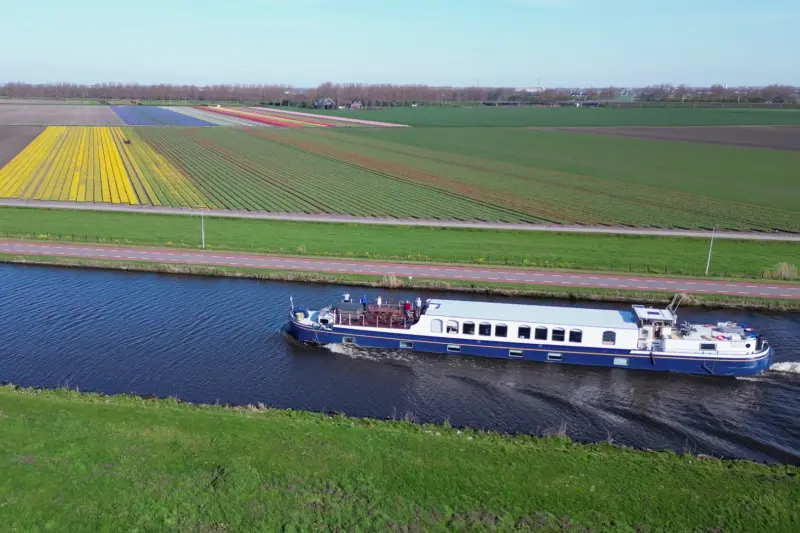
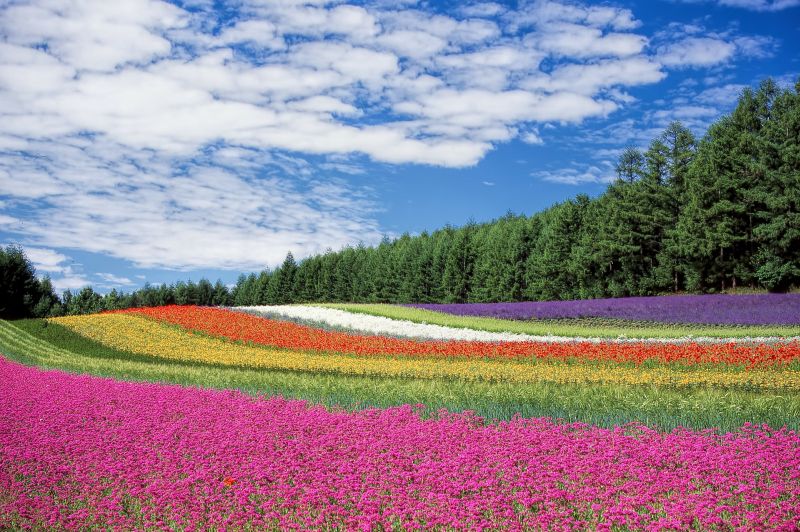
Spring is a popular time to cruise as the peaceful countrysides of Europe come alive with colours! Tulips are in bloom, and our Holland cruises are ready to whisk you away along its charming canals and waterways.
For more information on our Holland cruises, Contact Us.