 English
 Spanish
 French
 German
 Norwegian
 Portuguese
 Swedish
 Italian
 Russian
 Simplified Chinese
 Japanese

Nestled on the banks of the River Loire, the historic town of Gien, France is one of the most memorable stops on a Loire Valley and Burgundy Barge Cruise with European Waterways. This riverside destination combines centuries of history with world-class craftsmanship and scenic beauty, making it a highlight of any barge journey through central France.
Explore the Treasures of Gien, France on a Hotel Barge Tour
Exploring Gien
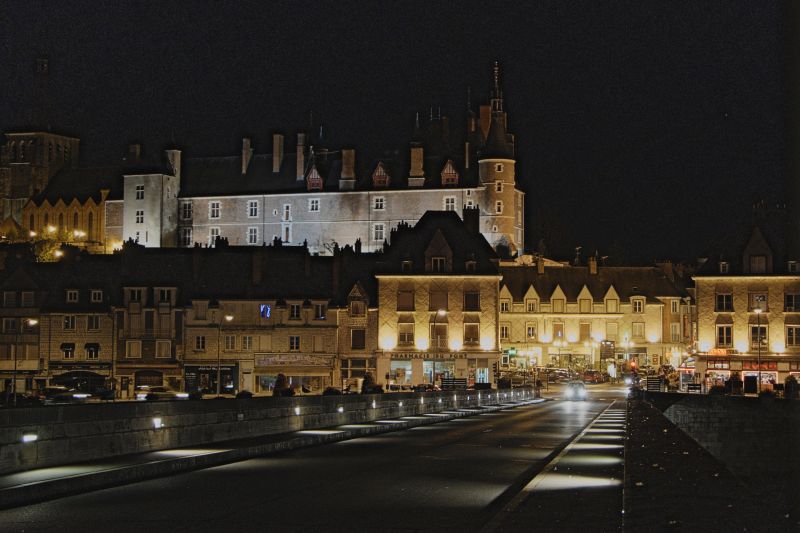
Although the settlement has a history that is thought to stretch back to prehistoric times, many of the town’s historic buildings were destroyed during the Second World War. The reconstruction in the 1940s, however, was largely sympathetic, which ensures that Gien still has a sense of its own history today.
The iconic view of the town – encompassing the River Loire, the eighteenth-century stone bridge and the medieval castle – can be best appreciated from the south bank of the river. Just remember to take your camera with you!
Highlights of Gien
Château de Gien
Dominating the skyline of Gien is the Château de Gien, a Renaissance-era castle built on 12th-century foundations. Over the centuries, this impressive fortress played host to French royalty, including Francis I and Louis XIV. Today it houses the Musée International de la Chasse, a fascinating collection of hunting artefacts, weapons and art that narrate the history of hunting in France.
This château is not just a historic landmark — it’s a vivid reminder of Gien’s place in French cultural heritage and a must-see for visitors exploring the Loire Valley on an Upper Loire and Burgundy barge cruise.
Gien Faïence
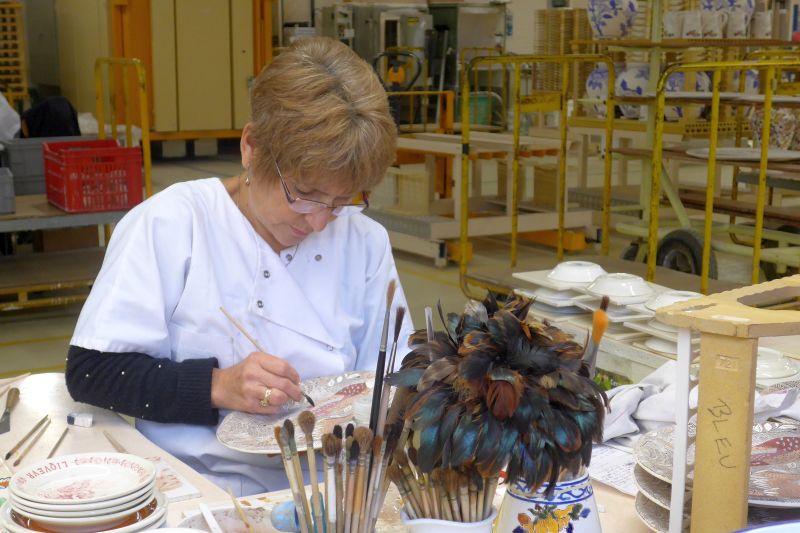
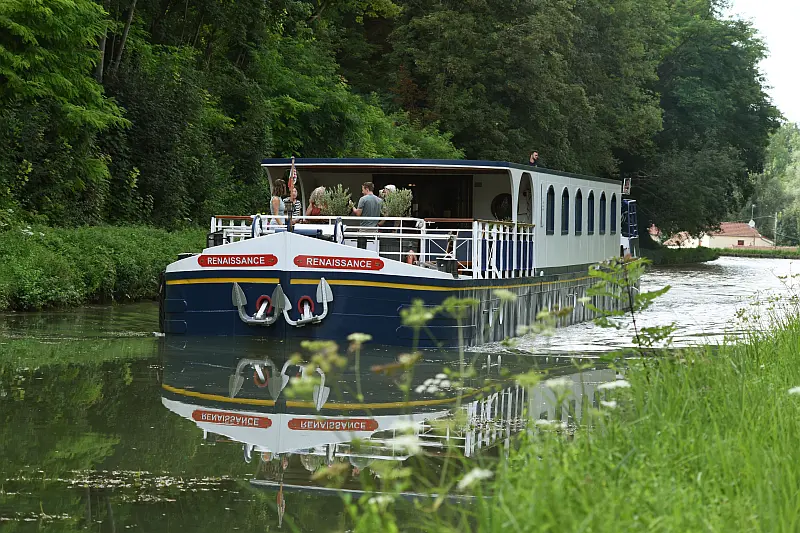
One of the highly anticipated tours during the cruise aboard Renaissance is of the Gien Faïencerie. Faïence pottery has been made in the town since 1821, when the Englishman Thomas Hall founded the factory. It offered the perfect location – wood for the kilns which could be sourced from the nearby Sologne forest, while the River Loire provided sand and water for the clay, as well as a means of transporting the finished goods across the country.
Gien is known for its vibrant, beautiful pottery, reproducing earlier styles at a much more accessible price. Today a trip to the museum will give you an insight into the fascinating creative process, as well as allowing you to admire some of the factory’s finest work over the years.
Why Gien is Perfect for a Barge Excursion
An upper Loire Valley and Burgundy Barge Cruise is designed to be slow, immersive and unforgettable, and exploring towns like Gien is a big part of that experience. From scenic riverside walks to boutique shopping and museum visits, Gien illustrates the diversity of French regional life along inland waterways.
European Waterways’ luxury hotel barges, like Renaissance, offer a relaxed way to experience this region, with daily excursions that delve into the heritage and beauty of places such as Gien.
Frequently Asked Questions
Where is Gien located in relation to the Loire Valley?
Gien is in the Loiret department in north-central France, situated directly on the Loire River — about 80 km from Orléans — making it an ideal destination within barge cruise itineraries that explore the Upper Loire.
What is special about the Château de Gien?
The Château de Gien is a historic castle rebuilt on medieval foundations and now home to the Musée International de la Chasse. It combines French Renaissance history with rich cultural displays, making it a standout sight on river cruises.
Can you visit the Gien faïence factory museum?
Yes, the Gien faïence factory museum showcases the town’s renowned pottery tradition, with demonstrations, historic pieces and insights into the creative process that established Gien as a leader in ceramic arts.
How does Gien feature on a Burgundy Barge Cruise?
On barge cruises through the Upper Loire and Western Burgundy, visits to Gien and its cultural highlights are included as part of the daily excursions, allowing guests to experience both the scenic waterways and the regional heritage.