Did you know that if a sparkling wine does not come from Champagne it cannot be called Champagne? So what is it called if it is made elsewhere, and why? It’s part tradition, part geography, plus a few strict laws.
Around the world, sparkling wines are made using a variety of grapes, methods, and regional techniques, each creating distinct flavors and styles. From light and fruity tank-method wines to complex, bottle-fermented classics, the world of sparkling wine is far broader than Champagne alone.
In this guide, we’ll explore the main types of sparkling wine, how they are made, the grapes used and what makes each one unique, taking you on a sparkling journey to Champagne and beyond.
Champagne: The Original Sparkling Classic
When it comes to the history of Champagne, no name is more legendary than Dom Pérignon. A 17th-century Benedictine monk at the Abbey of Hautvillers, Dom Pérignon is often considered the man who “invented” Champagne. While sparkling wine existed before his time, he is credited with refining the winemaking techniques that laid the foundation for the Champagne we know and enjoy today.
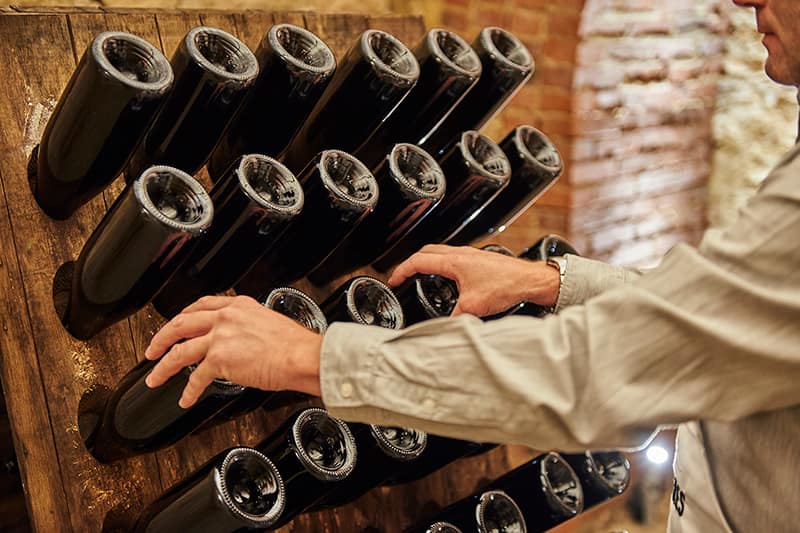
He perfected vineyard management, pioneered blending different grape varieties to create balance and complexity, and introduced innovations that helped control the unpredictable secondary fermentation process that produces bubbles. Today, all Champagne is made this way to produce crisp, highly acidic brut wines with lively fizz.
When is a Champagne not a Champagne?
It’s important to remember that not every sparkling wine is Champagne. In fact, the name “Champagne” is protected by strict French and international laws, and it can only be used for wines produced in the Champagne region of France, using the traditional second fermentation method and the permitted blend of three grape varieties: Chardonnay, Pinot Noir, and Pinot Meunier.
Sparkling wines made elsewhere, even if they use the same winemaking process, must carry different names, such as Prosecco in Italy, Cava in Spain, or Franciacorta in Lombardy. So while all Champagne is sparkling wine, not all sparkling wine is Champagne.
Crémant: France’s Other Sparkling Star
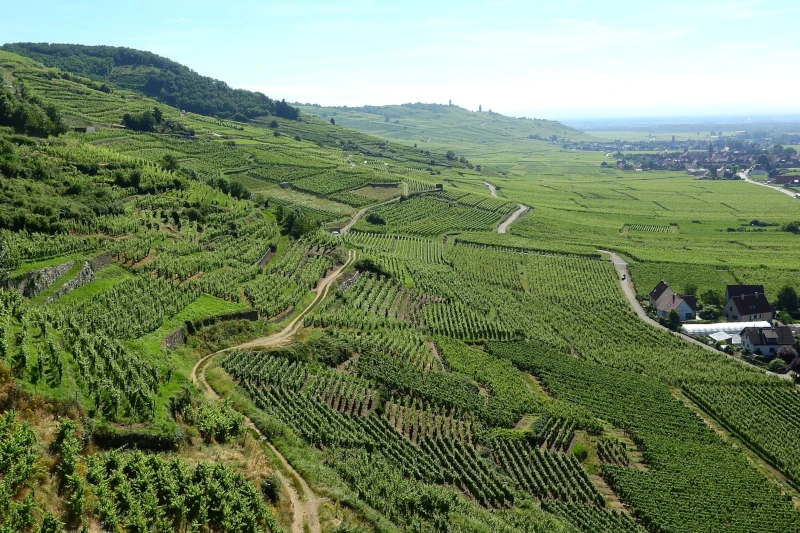
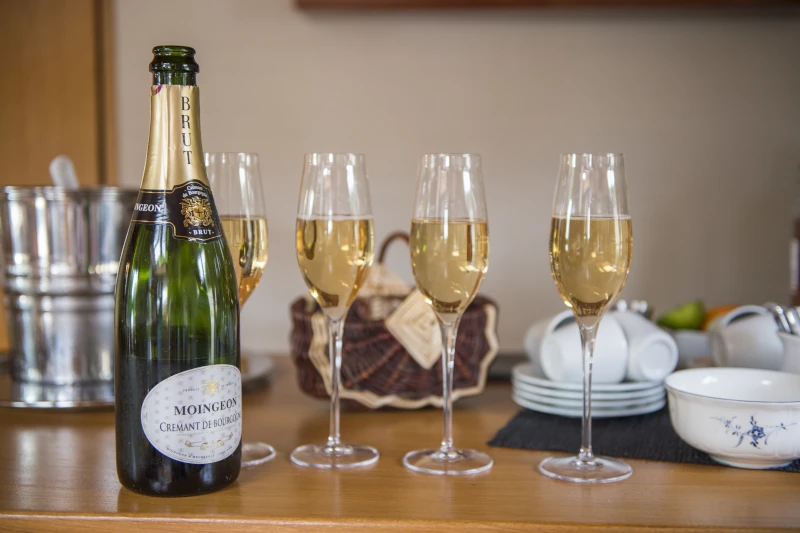
When it comes to French sparkling wine, Champagne may reign supreme, but Crémant offers an equally delightful experience (often at a fraction of the price). The term “Crémant” refers to sparkling wines made outside the Champagne region but produced using the same traditional method of secondary fermentation in the bottle. Unlike Champagne, Crémant doesn’t have a single prescribed blend of grapes; instead, it reflects the local terroir and varietals of the region in which it’s made.
Crémant can only carry the name if it comes from one of France’s designated appellations. The most famous is Crémant d’Alsace, known for its bright, floral style often made with Pinot Blanc and Riesling. Other notable regions include Crémant de Loire, which showcases Chenin Blanc and Cabernet Franc; Crémant de Bourgogne, offering a more Champagne-like profile with Chardonnay and Pinot Noir; and Crémant de Limoux, one of the oldest sparkling wine regions in France.
Beyond France, Luxembourg also produces under similar rules. Together, these regions highlight the diversity of Crémant, making it one of the most versatile and underrated sparkling wine categories in the world.
A Sparkling History of Prosecco
While Champagne often steals the spotlight, Prosecco has a rich history of its own, rooted in the rolling hills of northeastern Italy. The wine takes its name from the village of Prosecco near Trieste, where the grape—once known as “Prosecco” and now officially called Glera—was first cultivated. References to this grape date back as far as Roman times, when it was praised for producing light, refreshing wines. Today, the Veneto and Friuli Venezia Giulia regions remain the heart of Prosecco production, with the prestigious Prosecco DOCG zones like Conegliano Valdobbiadene setting the gold standard for quality.
Unlike Champagne, which undergoes secondary fermentation in the bottle, Prosecco is crafted using the Charmat method (also called the tank method). In this process, the still wine made from Glera grapes is placed into large stainless steel tanks, where a second fermentation occurs under pressure. This technique allows winemakers to preserve the grape’s fresh, fruity flavors while creating a light, delicate sparkle.The result is a more fruit-forward, easy-drinking style of sparkling wine, typically lower in alcohol and less complex than Champagne, but no less enjoyable.
Asti Spumante: Italy’s Sweet Sparkler
From the rolling hills of Piedmont comes Asti Spumante, a sparkling wine that’s enjoyed for its fruity, sweet, and aromatic style. Made exclusively from the Moscato Bianco grape, Asti is light-bodied, low in alcohol, and bursting with flavors of peach, apricot, and floral notes.
Unlike Champagne or Franciacorta, it is crafted like Prosecco using the Charmat (tank) method, which preserves the fresh, natural aromas of the grapes while producing a lively, gentle sparkle.
Franciacorta: Italy’s Hidden Gem of Bubbles
While Prosecco may be Italy’s most famous sparkling wine, Franciacorta is its luxurious, Champagne-style cousin. Produced in the Lombardy region, near Lake Iseo, Franciacorta has been crafted since the 1960s using the same traditional method as Champagne, with a second fermentation taking place in the bottle. Unlike Prosecco, which is made primarily from Glera, Franciacorta relies on noble varieties like Chardonnay, Pinot Nero (Pinot Noir), and Pinot Bianco, resulting in a richer, more complex style of sparkling wine. Extended aging on the lees adds depth, creaminess, and more refined notes.
Despite its exceptional quality, Franciacorta isn’t nearly as well-known as Prosecco—and the reasons are mostly practical. Prosecco is produced in huge volumes and marketed worldwide as an affordable, everyday sparkling wine, while Franciacorta’s traditional method requires more time, labor, and cost, leading to smaller production and higher prices.
Cava: Spain’s Sparkling Secret
Spain’s answer to sparkling wine, Cava, was born in the mid-19th century in Catalonia. Inspired by Champagne, winemakers in the Penedès region began experimenting with the traditional method of secondary fermentation in the bottle. Over time, Cava developed its own identity, using native Spanish grapes like Macabeo, Xarel·lo, and Parellada to create a style that is distinctively Mediterranean—fresh, citrus-driven, and versatile. Today, most Cava is still produced in Catalonia.
Like Champagne, Cava is made using the traditional method, where a second fermentation happens inside the bottle, followed by aging on the lees to add depth and complexity. However, Cava is typically aged for shorter periods, which helps keep its character bright, crisp, and approachable. Depending on the producer, styles can range from youthful and zesty to more refined, with nutty, toasty notes. A balance of tradition and everyday drinkability.
Californian Champagne: Sparkle from the New World
Across the Atlantic, California has been making its mark in the world of sparkling wine for over a century. Winemakers in regions like Napa Valley and Sonoma embraced the traditional Champagne secondary fermentation method to produce elegant, crisp sparkling wines with bright acidity and fine bubbles. Often crafted from Chardonnay and Pinot Noir, these wines mirror the classic Champagne style while reflecting California’s warmer climate, which brings riper fruit flavors and a slightly fuller body.
Interestingly, a few California wineries are still allowed to label their sparkling wines as “California Champagne” thanks to a 100-year-old loophole in U.S. labeling laws. This exception dates back to a time before international agreements strictly reserved the term “Champagne” for wines from France’s Champagne region. Wineries that were using the name prior to the regulations were grandfathered in, letting them continue the tradition legally.
English Sparkling Wines: The Rising Stars
In recent decades, English sparkling wine has been capturing the attention of wine lovers around the world. The chalky soils and climate of southern England — particularly in Sussex, Kent, and Hampshire —create ideal conditions for producing crisp, high-acid wines that rival Champagne in elegance and finesse.
Often made from the classic Champagne grapes Chardonnay, Pinot Noir, and Pinot Meunier, English sparkling wines have a delicate structure, fine bubbles, and vibrant citrus and orchard fruit flavors that reflect their northern terroir. The cooler climate leads to slower grape ripening, which preserves acidity and enhances freshness, resulting in wines with a bright, elegant character. While production volumes are still relatively small compared to Champagne or Prosecco, this exclusivity adds to the appeal.
Pétillant-Naturel: The Wild Sparkle
Pétillant-Naturel, often called Pét-Nat, is the original sparkling wine method, predating Champagne by centuries. Made using the “méthode ancestrale”, the wine is bottled before primary fermentation is complete, allowing natural carbonation to form in the bottle. This produces a lightly sparkling wine.
Pét-Nats can be made from almost any grape variety, giving them a vast range of flavors—from crisp and citrusy to fruity and funky—making each bottle a unique experience. In recent years, Pét-Nat has become a favorite among natural wine enthusiasts for its minimal intervention, low sulfites, and expressive, sometimes quirky personality.
The Journey of Sparkling Wine
From the iconic elegance of Champagne to the approachable fizz of Prosecco, sparkling wine comes in many styles. These wines can be broadly divided by how they are made, and each method gives a distinct character.
Some, like Champagne and traditional-method wines, develop complexity and fine bubbles through a second fermentation in the bottle. Others, like Prosecco and Asti, use the tank method to preserve fresh fruit flavors and create a lighter, more approachable style. Meanwhile, pétillant-naturel wines embrace minimal intervention.
Exploring these different approaches shows that sparkling wine is not just about celebration—it’s a window into winemaking creativity and tradition – with each worth its own exploration. Enjoy.
Come and Enjoy the Sparkle
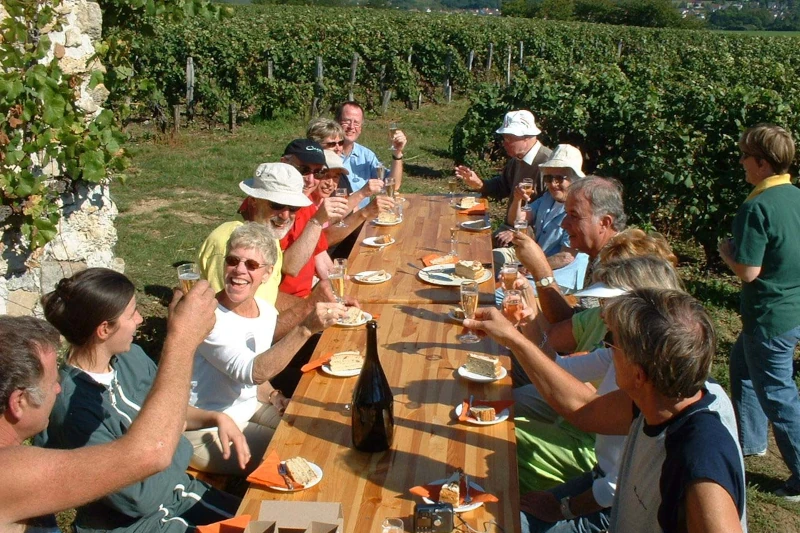
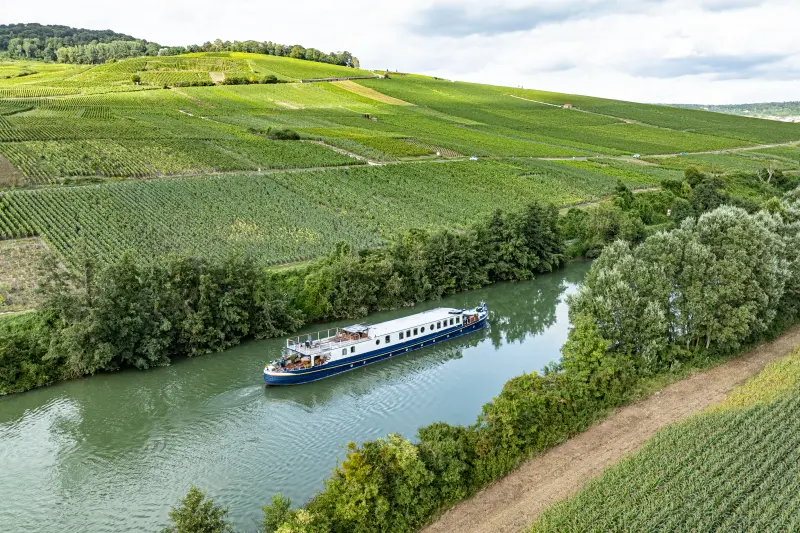
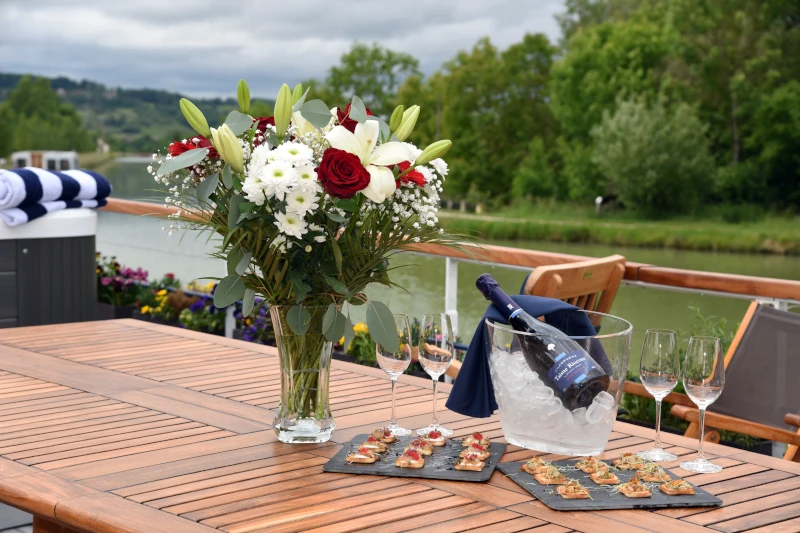
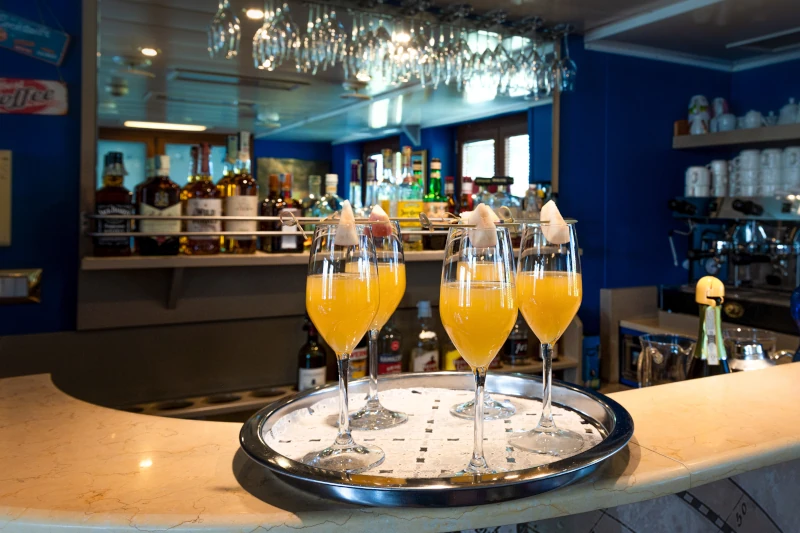
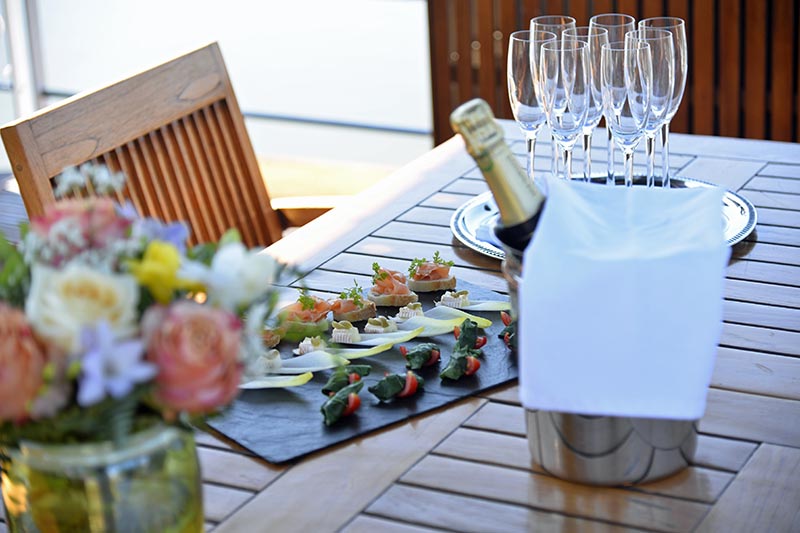
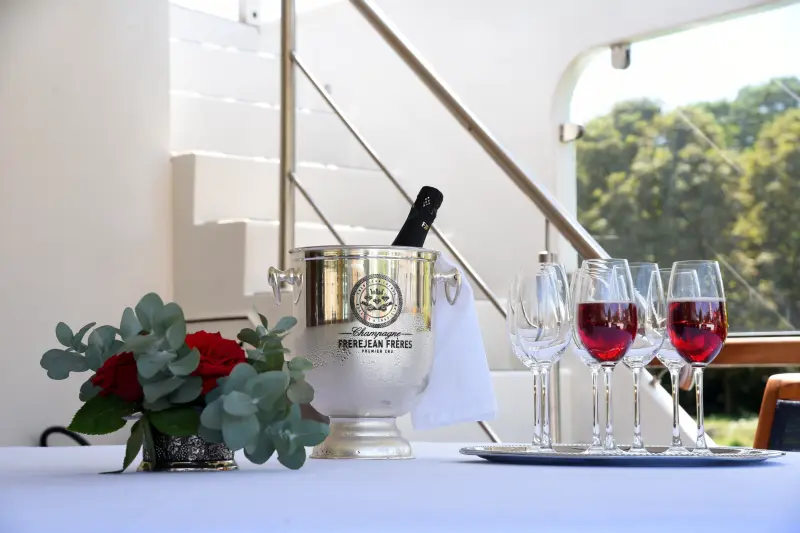
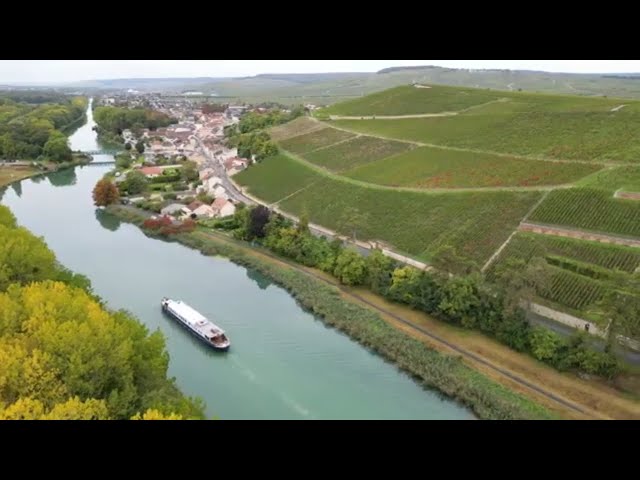
We offer a variety of sparkling wines on our hotel barges, from your greeting as you come onboard, to your toast with the Captain at the end of your journey. Maybe you will discover a new favourite.
If a particular region interests you, check out our various destinations. Or simply Contact Us for more information. We look forward to welcoming you.
 English
 Spanish
 French
 German
 Norwegian
 Portuguese
 Swedish
 Italian
 Russian
 Simplified Chinese
 Japanese