English
 Spanish
 French
 German
 Norwegian
 Portuguese
 Swedish
 Italian
 Russian
 Simplified Chinese
 Japanese

Discover the differences between organic and biodynamic wines on your luxury barge cruise through Europe’s finest wine regions. Learn about wine certifications, sustainable practices, and how these wines impact taste and health…
Organic vs. Biodynamic Wine: Exploring the Differences on Your Luxury Barge Cruise
What’s the Difference Between Organic and Biodynamic Wine?
At European Waterways, we are not all just about fun in the sun or relaxing, stress-free holidays, but occasionally we like to add a touch of education – should a person be that way inclined. When it comes to wine, we often get asked about non-organic, organic and biodynamic varieties, with guests wishing to understand their differences. Not only between each other, but how this may relate to their own home. And, does it really make a difference when it comes to wine? If so, how?
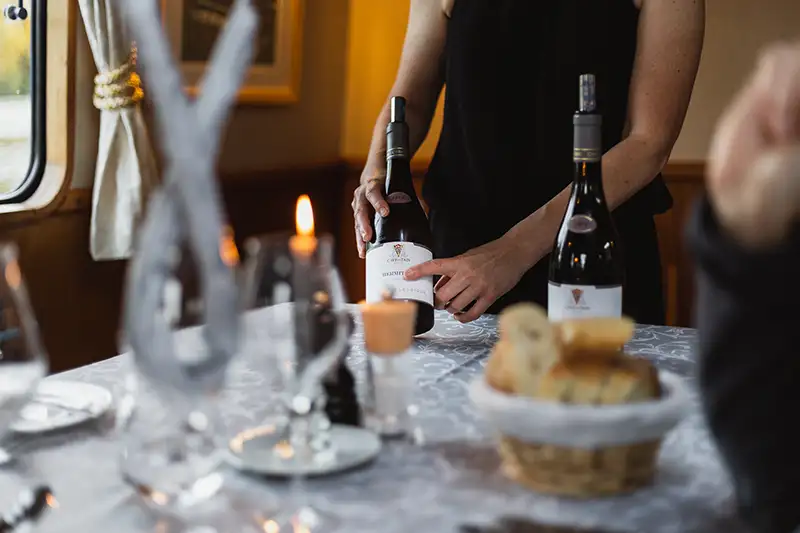
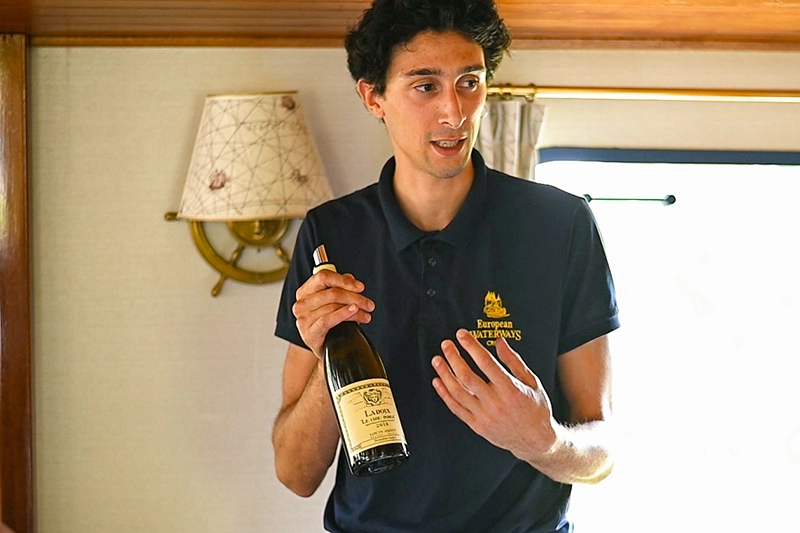
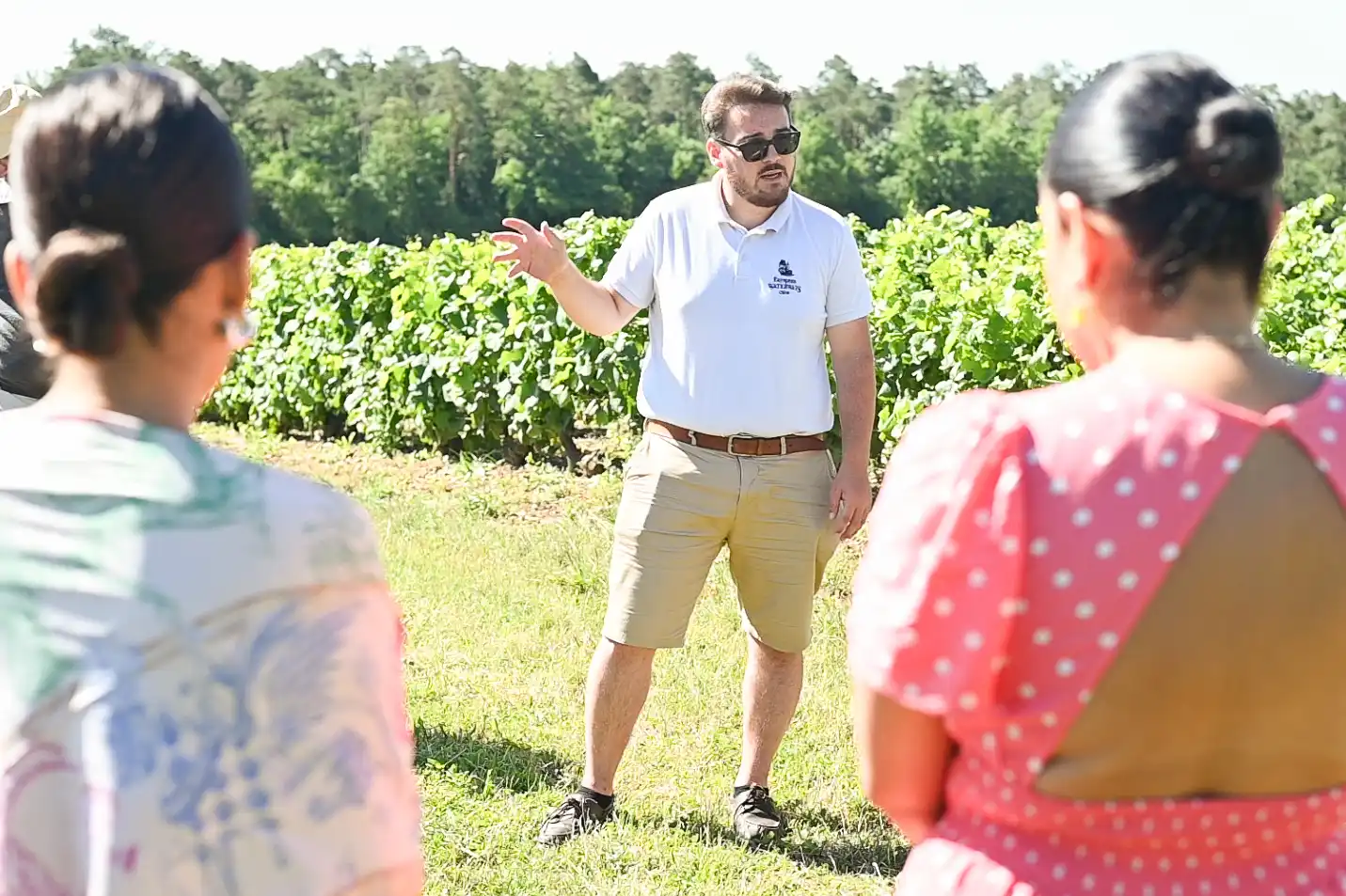
Almost all of European Waterways’ hotel barges travel through wine country. Daily private (and often exclusive) excursions include winery tours and tastings, as well as wine pairings with meals whilst onboard. So as part of our educational series, we thought we would shed some light on what makes a wine non-organic, organic or biodynamic.
A Brief History of Organic and Biodynamic Winemaking
To understand the differences between organic and biodynamic wines, we first need to go back in history. To simplify, we’re going to focus on France and French wines, but this applies more or less across the board in Europe as EU rules apply throughout.
Agricultural intervention goes way back, increasing particularly from the late 19th century. Originally made from plant-based derivatives, the true beginnings of synthesised agricultural chemicals began in the 1940s. With regards to wine, the 1960s saw focus on ways to eradicate mildew, pests and more, to safeguard and increase grape quantities, as well as other agricultural crops, and thus increase yields.
Forward to the 1980s and we see the advent of organic culture begin to emerge, with France the pioneer country as the first to recognise organic farming. Organics were a move away from man-made intervention back to natural techniques. By the 1990s organic became far more prevalent throughout Europe, with stricter and stricter guidelines and consequently regulations coming into place. This culminated, in France, in a 2018 legislative act laying down rules on production and labelling.
Organic Wine: What Does the Agriculture Biologique (AB) Label Mean?
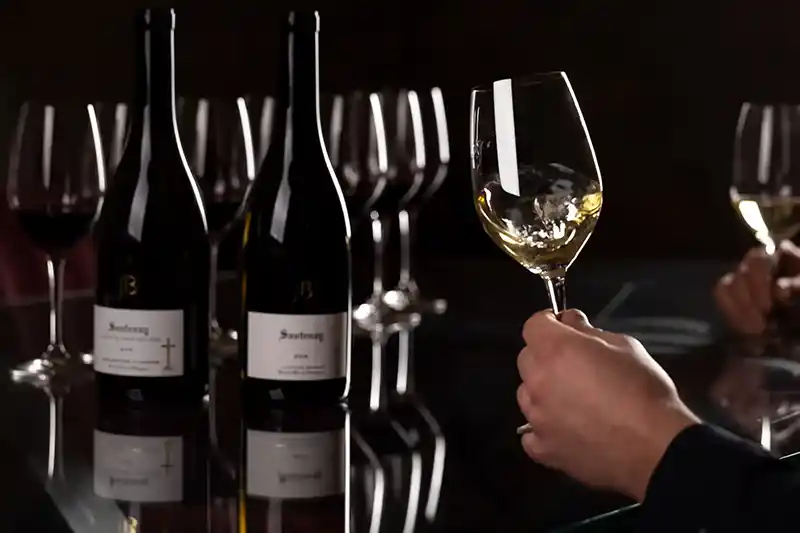
In the EU, when we talk about organic wine and particularly French wine, we’re usually talking about the Agriculture Biologique (AB) label. To show this on the bottle label means the wine grower/maker has to fulfil specific specifications. These initial rules were that the grapes are grown without GMOs, synthetic pesticides, herbicides, fungicides and chemical fertilisers.
Since 2012, the AB label has gone on to regulate wine making as well. This is to ascertain that the making of wine also incorporates natural processes, such as the restricting of sulphur (SO2) and tartaric stabilisation. To be able to use the AB designation, winemakers must follow the rules for three years and then be certified. Once certified, regular checks are done by independent organisations.
Biodynamic Wine: A Step Beyond Organic Certification
The concept of biodynamics predates the term ‘organic’. Introduced in 1924 by Rudolph Steiner, he proposed the use of natural techniques over man-made ones. This evolved to mean not only avoiding chemicals, like organic farming, but also minimising external inputs, producing everything on-site, diversifying crops, and following lunar cycles. Biodynamic wines are first and foremost organic, but then go on to adhere to these additional practices.
Biodynamics is more a holistic approach, rather than ‘simply’ a change from man-made to natural chemicals. This results in a diversification of the winery to be not only vineyard, but possibly forest, farm, with bee hives and/or other crops. The principle is that each winemaker is not only responsible for a vineyard but all that goes around and in it, maintaining sustainability, health and biodiversity, including soil husbandry, livestock integration and ecosystem preservation.
Understanding Demeter and Biodyvin Biodynamic Certification
Biodynamic wine is certified by Biodyvin or Demeter, both of which require prior organic certification. Beyond this, producers must meet biodynamic standards, which include avoiding synthetic additives (such as commercial yeast), using specialised compost preparations, ensuring continuous soil cover, and following the biodynamic lunar calendar or natural growth rhythms.
Biodynamic winemakers often say they spend 90% of their time in the vineyard, believing that the care they provide there shapes the wine more than any intervention in the winery. As a result, each vintage is unique, reflecting the ever-changing influence of the ecosystem on the vineyard.
Does Organic or Biodynamic Winemaking Affect Taste?
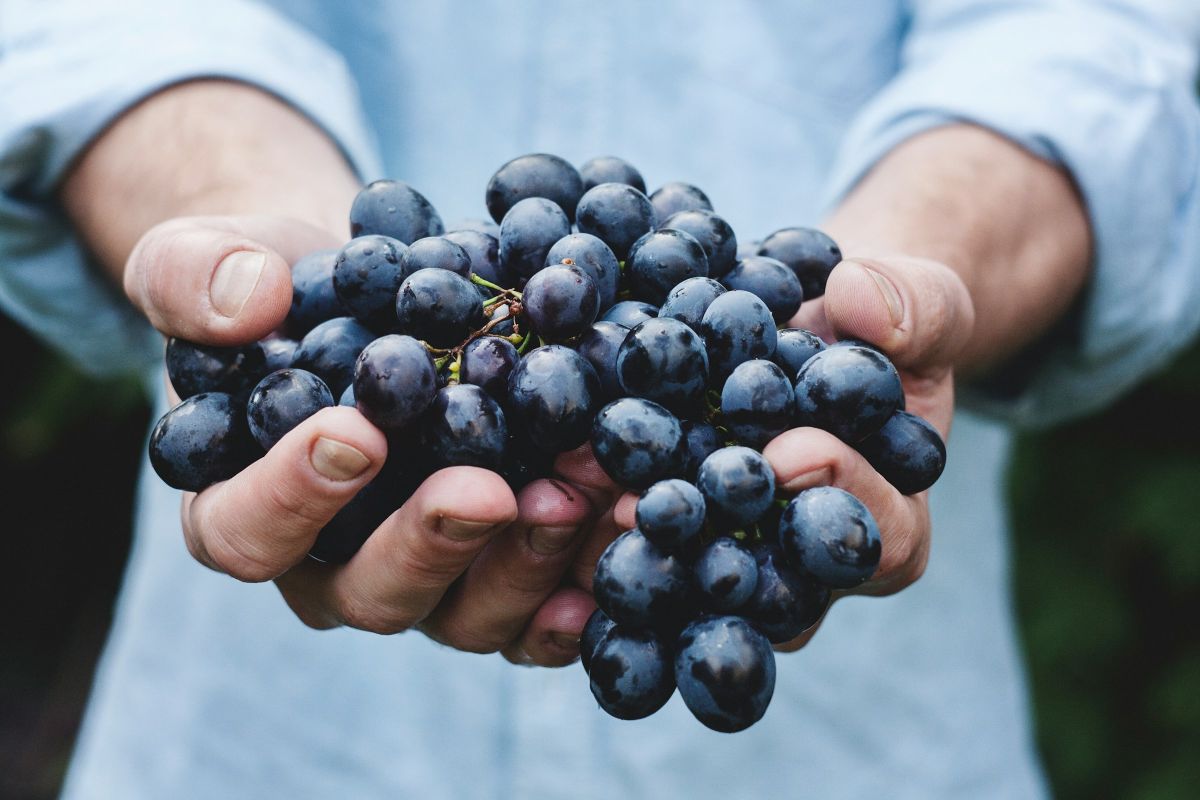
Hopefully the difference between organic and biodynamic is a bit clearer. And in consequence, the all-important question becomes is there a difference in taste? To many of us, no, not really. Unless you are someone who reacts to certain chemicals, most notably sulphur, there will be no noticeable difference. Rather it is a potential difference to your health.
Being specifically organic or biodynamic does not guarantee a great wine, though it may have an influence. Certainly, the quality of the grapes makes a very real difference, of which being organic and biodynamic can play a bigger part. But ultimately it is the terroir and the winemaker that will determine what is to be a great wine.
Experience Organic and Biodynamic Wines on a Luxury Barge Cruise
The best way to appreciate the nuances of organic and biodynamic wines is to experience them firsthand!
Join us on a luxury hotel barge cruise through some of Europe’s most prestigious wine regions. Enjoy private tastings, vineyard visits, and expertly paired onboard meals as you deepen your understanding of these fascinating winemaking traditions.