 French
 English
 Spanish
 German
 Norwegian
 Portuguese
 Swedish
 Italian
 Russian
 Simplified Chinese
 Japanese


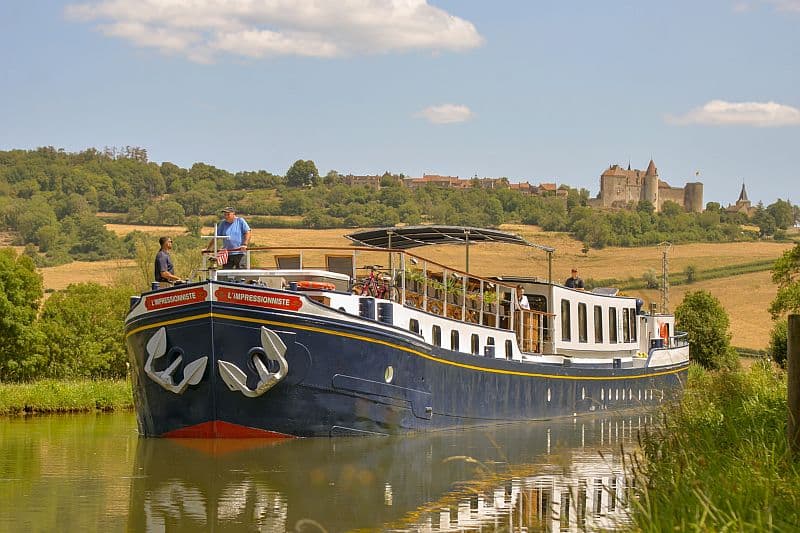
The history of France would not be inclusive if we didn’t touch on monasticism and the rise in power of the French monasteries and Abbeys. These institutions were the gatekeepers, teachers, healers and librarians of the middle ages. A cruise aboard our Burgundy hotel barges, L’Art de Vivre, La Belle Epoque, Finesse and L’Impressionniste gives you the opportunity to visit and truly immerse yourself in this powerful history.
Discover the History and Legacy of French Monasteries and Abbeys on a Barge Cruise
Understanding Monasticism: Origins and Influence in France
Monasticism began in the Middle East in the 4th century, with the concept of removing oneself from the world in order to focus on things that were deemed of higher importance, such as spiritual devotion. Monasticism in France gained momentum from the 6th century and particularly during the Middle Ages. At its zenith, there were nearly 1,000 monasteries in medieval France. These were made up of primarily Benedictine abbeys, followed very closely by Cistercian abbeys.
The lifestyle gained its distinctive form in Burgundy, following Saint Benedict’s monastic rules of ‘pray and work’. The Benedictine Abbaye de Cluny (or Abbey of Cluny), begun in 910, grew in power spreading its influence throughout Burgundy and beyond and ultimately becoming one of the most important and powerful French monasteries.
Monastery vs Abbey: Key Differences Explained
A monastery generally refers to a place of religious practice for both monks and nuns. An abbey is a particular type of monastery with an abbot or abbess managing it. Abbeys were often larger, more independent and offered more facilities than a monastery, with a central church or cathedral as well as other buildings that served the needs of the religious community.
The Vital Role of Monasteries in Medieval French Society
Originally monasteries were retreats from the world, dedicated to spiritual devotion and then guidance, but they evolved to become curators for culture and much more. French monasteries became essential to society because they fulfilled a variety of purposes. They served as the intellectual centre of their towns since they were frequently the only locations where formal education could be obtained. They copied books, preserving knowledge, and became centres of education, including becoming pioneers in architecture and medicine.
Many ran hospices or grew medicinal herbs and treated the sick. Their ‘healthcare’ services were frequently the sole source of care accessible to the general public, especially in rural areas. They created complex irrigation systems and developed agriculture (including wine production). And, many abbeys gained in wealth as a consequence of this innovation.
How Abbeys Expanded Their Power and Influence in Medieval France
During the Middle Ages, gifts of land and money from the nobility, even kings, allowed abbeys to grow remarkably. They began to become significant political and economic centres.
In medieval France, abbeys began to play a weighty part in both religious and political life. They became more and more politically influential. Their abbots served as personal counsellors to kings and lords, and they frequently possessed enormous estates of land. Some abbeys, like the Abbaye de Cluny in the Saône-et-Loire department of southern Burgundy, even had interregional authority and were crucial to the governance of large areas and religious reform.
Established in 910, the Abbaye de Cluny developed into one of the biggest monastic networks in European history, serving as its spiritual hub, but also as an administrator. It made it easier for individuals, literature, creative concepts, and scientific information to travel across national boundaries.
The Impact of Reformations and the French Revolution on Abbeys
The Abbaye de Cluny grew conspicuously wealthy in direct opposition to the three vows of poverty, chastity and obedience that monks took. Wishing to fall back to the original Rules of St. Benedict, the Cistercians (aka the ’white monks’ as opposed to the ’black monks’ of Cluny), aimed for reformation under the leadership of St. Bernard with the desire to return to a simpler and more austere way of life. Ultimately, they too morphed over time and were subject to reform in the 15th century by the Trappist movement.
Some monasteries saw their populations decline, even die out, as a result of the reformations, as well as the Wars of Religion and then the ‘Enlightenment’ – a cultural movement in 17th-18th century Europe. The French Revolution forced the abandonment of yet more abbeys. Many of their buildings were taken apart, stone by stone, for re-use elsewhere which often left the church itself standing. The Abbaye Saint-Martin de Ligugé, founded in 361 and the oldest monastery known in western Europe, was completely destroyed during the French revolution. But there are still other surviving abbeys that can be visited today.
Visiting Historic French Monasteries on a Hotel Barge Cruise
A number of our hotel barges here at European Waterways visit those surviving abbeys:
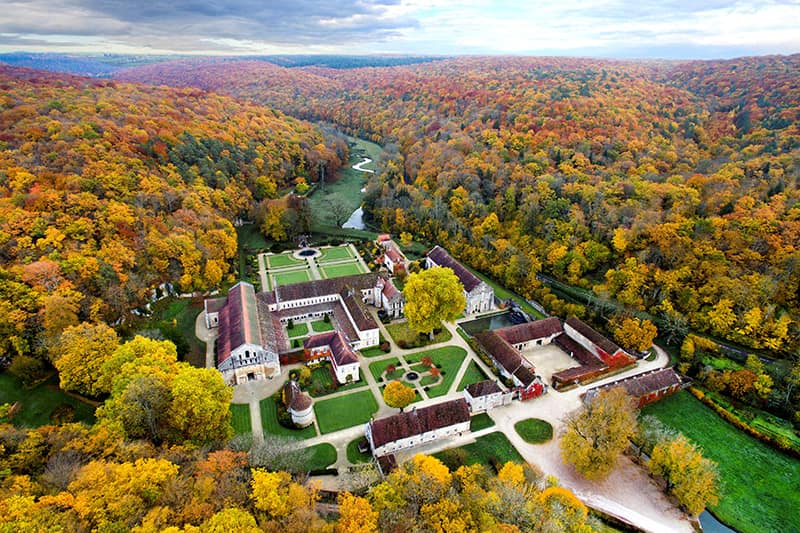
Abbaye de Fontenay
Founded in 1118 by Saint Bernard, this Burgundian monastery is one of the oldest and most complete Cistercian abbeys in Europe. It flourished up to the 1500s then went into decline, particularly during the War of Religion. After the French Revolution the abbey was sold to the Montgolfier family, who changed it into a paper mill. It was purchased by a family member in 1906 with the successful intent to restore it to its former glory.
Visit Abbaye de Fontenay onboard La Belle Epoque.
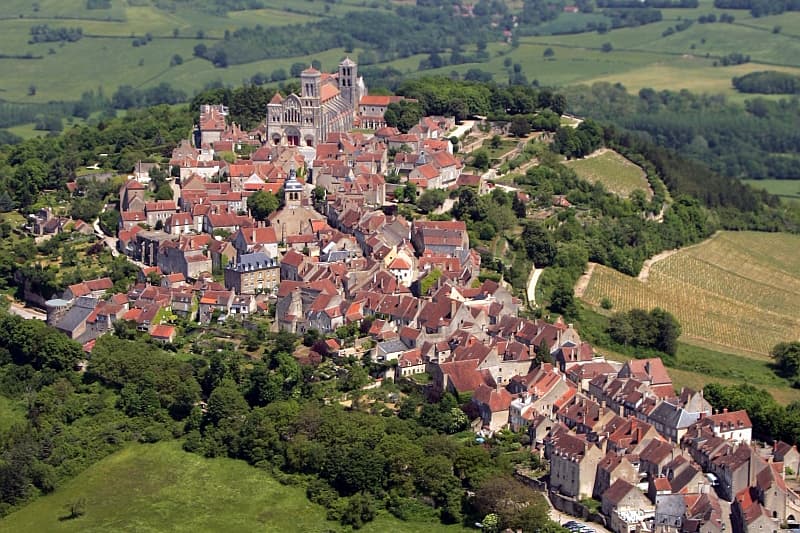
The Basilique Sainte-Marie-Madeleine de Vézelay, or Basilica of Vezelay
Perched at the top of the hilltop town of Vezelay is the church of St. Mary Magdalene, a former French abbey. It was also a Benedictine and Cluniac monastery. The relics of St. Mary Magdalene were obtained by the Benedictine abbaye de Vézelay shortly after its establishment in the ninth century, and it has since grown to be a significant destination for pilgrims. Vézelay was also the centre of a crossroads of four major pilgrimage routes through France. Even today, pilgrims set off from Vézelay on the Camino de Santiago Compostela, ending in the town of the same name in northern Spain.
Enjoy a wander of Vezelay while onboard L’Art de Vivre.
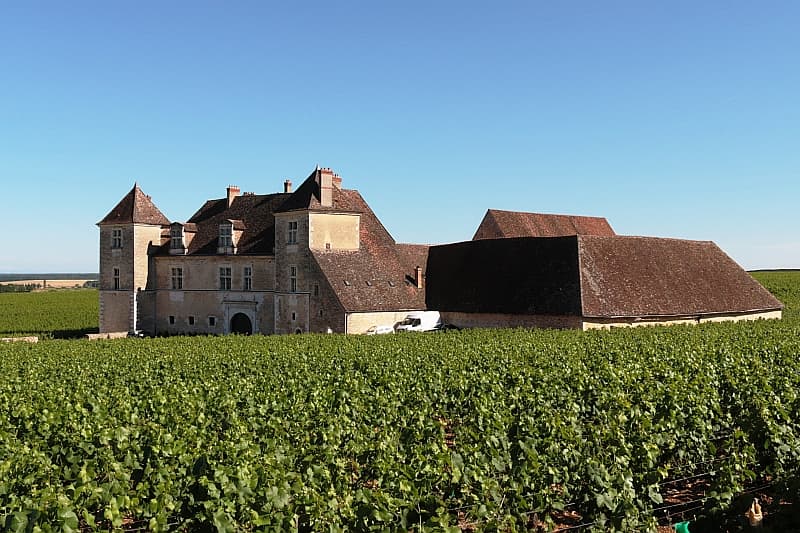
Clos de Vougeot
Clos de Vougeot is not in itself a monastery or abbey but was part of the nearby Abbaye de Cîteaux. Built in the 12th century by the monks, it was originally managed as both farm and vineyards to sustain the abbey, in time the vineyard aspect would become more popular, and viticulture would take over, eventually surrounding the place with rows of vines. Today it is the home of the Confrérie des Chevaliers du Tastevin, a prestigious French wine confraternity), established in the early 20th century to promote Burgundian wine. And many argue it is the birthplace of wine in Burgundy.
Visit whilst onboard l’Impressionniste or Finesse.
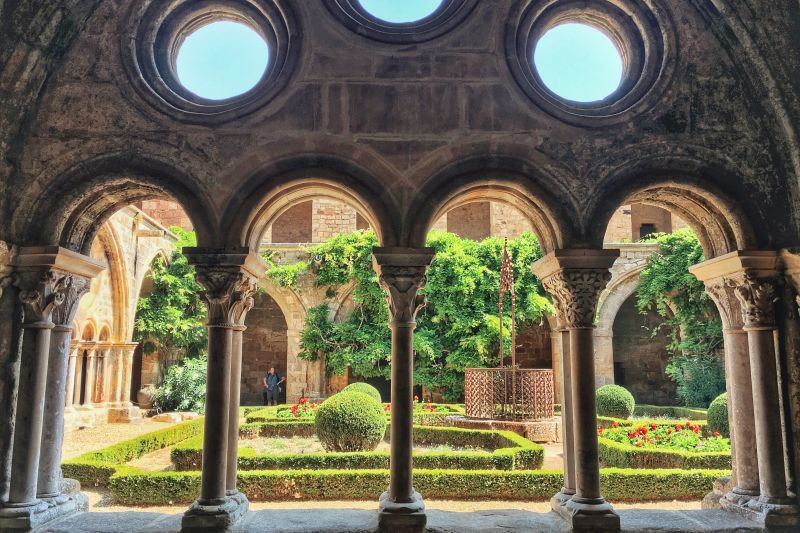
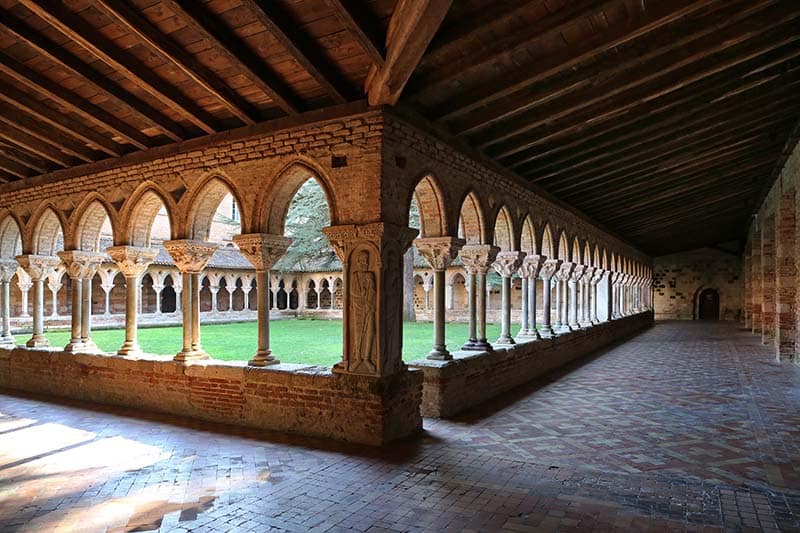
The Abbaye Saint-Pierre de Moissac, or Moissac Abbey
Founded in the 7th century, this monastery was originally Benedictine, in line with the Abbaye de Cluny. It is known today for its impressive Romanesque sculpture and architecture, in particular its beautiful cloister, which they claim is the oldest in Europe.
Meander history while onboard the hotel barge Rosa.
Discover French Monasteries and Abbeys with European Waterways
The chance to see these monuments of French history, culture and learning, is truly a unique opportunity. Four of our Burgundy hotel barges cruise along canals that pass near past monasteries still in existence and available to see in all their glory.
Contact Us for more information or to book your ideal barge cruise.